

SKIN LINE · CONCERNS
Hyperhidrosis
Why it occurs and what we can do about it
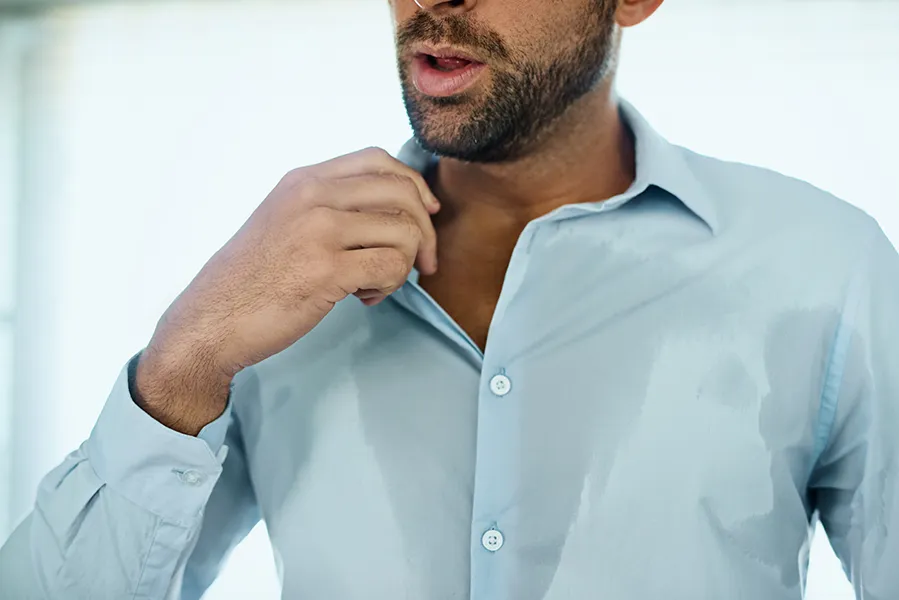
Excessive sweating, known in medical terms as hyperhidrosis, is a condition that can affect both everyday comfort and self-esteem. Unlike normal sweating caused by high temperatures, exercise or strong emotions, in hyperhidrosis the amount of sweat can be significantly greater than is necessary to regulate body temperature.
Heavy sweating is often simply regarded as an unpleasant bodily trait, but when it is constant, difficult to control and interferes with work, social interactions or daily activities, it is advisable to seek an appropriate solution. In some cases, excessive sweating is a condition in its own right, whilst in others it may be linked to a medical condition or the use of certain medications.
What is hyperhidrosis?
Sweating is a natural mechanism by which the body regulates its temperature. When we get hot, the sweat glands are activated, and the evaporation of sweat from the skin’s surface helps to cool the body.
In hyperhidrosis, however, sweating is excessive in relation to the body’s actual needs. It can occur even when a person is not physically active, is not feeling hot, and there is no obvious external stimulus. The problem most commonly affects the armpits, palms, soles of the feet, face and scalp.
For some people, sweating is so severe that it leaves visible stains on their clothes, makes it difficult to hold objects, or necessitates frequent changes of shoes and clothes. This can gradually lead to discomfort, anxiety and avoidance of certain social situations.
Types of excessive sweating
A basic distinction is made between primary and secondary hyperhidrosis. The difference between them is important because it determines how the cause should be investigated and how the problem should be approached.
Primary focal hyperhidrosis – in this condition, no other underlying medical condition or medication has been identified that would explain the excessive sweating. Usually, one or several specific areas are affected – for example, the palms, soles, armpits or face. The problem often begins in childhood or adolescence, and in some people there is a family history of the condition.
Secondary hyperhidrosis – this is associated with another medical condition or with the use of certain medicines. Unlike the primary form, sweating may be more generalised and affect a larger area of the body.
Causes and risk factors for hyperhidrosis
The causes depend on the type of hyperhidrosis. In the primary form, it is thought that the nerve signals controlling the eccrine sweat glands overstimulate them. The exact mechanism cannot always be determined, and heredity is likely to play a role in some people.
In secondary hyperhidrosis, excessive sweating may be linked to various factors and conditions, including:
- thyroid dysfunction;
- diabetes and episodes of low blood sugar;
- certain infections;
- hormonal changes, including those associated with the menopause;
- certain neurological disorders;
- certain cancers;
- taking certain medicines, including some antidepressants, painkillers and medicines for hormonal or metabolic conditions.
Of course, sweating can also be temporarily exacerbated by entirely normal factors such as high temperatures, physical exertion, stress or strong emotions. This in itself does not mean that a person is suffering from hyperhidrosis.
Is excessive sweating a medical condition?
Yes, hyperhidrosis is regarded as a medical condition where sweating is excessive and does not correspond to the body’s need for cooling. However, this does not mean that every person who sweats more than usual necessarily has hyperhidrosis.
It is particularly important to establish whether the condition is a primary form or secondary sweating caused by another factor. In the case of secondary hyperhidrosis, treating the underlying condition or changing medication under medical supervision may help resolve the problem.
Hyperhidrosis can also have a significant impact on quality of life. Constantly damp palms, wet clothes or the fear of visible marks on them can make a person feel self-conscious and lead them to avoid professional or social interactions.
When should you see a doctor?
Consulting a specialist is recommended when sweating is so severe that it disrupts daily life, causes emotional distress or begins to limit social interactions. It is particularly important to seek medical advice in the event of a sudden change in the amount of sweating or the onset of unexplained night sweats.
Sudden, heavy sweating accompanied by symptoms such as dizziness, chest pain or discomfort, nausea or a rapid heartbeat should not be ignored. In such cases, a prompt medical assessment is necessary.
The doctor can assess the nature of the sweating, the affected areas and the timing of its occurrence, as well as order the necessary tests where a secondary cause is suspected. A dermatologist can also help in selecting an appropriate treatment for the hyperhidrosis itself.
Daily home care for excessive sweating
Daily habits cannot always eliminate hyperhidrosis, but they can help to better control the symptoms and reduce discomfort.
A suitable antiperspirant – for some people, products containing active antiperspirant ingredients may be the first step in managing sweating. In cases of more severe hyperhidrosis, a dermatologist may recommend a medical-grade antiperspirant with a higher concentration of the active ingredient.
Keeping the skin dry – regularly drying the armpits, feet and other problem areas reduces the sensation of constant dampness and can limit some of the unpleasant consequences of excessive sweating.
Appropriate clothing – loose-fitting clothes made from breathable fabrics are usually more comfortable. If your feet sweat, it is important that your shoes provide good ventilation and that you change your socks as needed.
Monitoring personal triggers – for some people, sweating is exacerbated by certain situations, foods or drinks. Keeping brief notes on when the problem is at its worst can help identify the individual factors that trigger it.
It is important, however, that home care does not become a substitute for medical advice when sweating is severe, persistent or has changed suddenly.
Home remedies for managing excessive sweating
Garden sage (Salvia): This is the most potent herb for combating sweating. It contains tannins, which constrict the glands. It can be drunk as a tea or applied as a cold compress.
Green tea: Acts as a natural astringent. Wiping the armpits with a cooled infusion closes the pores and kills bacteria.
Apple cider vinegar: Balances the skin’s pH and kills odour-causing bacteria. Apply with a cotton pad in the evening before bed and wash off in the morning.
Bicarbonate of soda: Mix a little bicarbonate of soda with water or lemon juice to form a paste. Leave on for 10–15 minutes and rinse off. It absorbs moisture immediately.
Witch hazel (Hamamelis virginiana): A natural astringent that dries the skin and acts as a natural antiperspirant.
Modern treatments for hyperhidrosis
The good news is that excessive sweating can be managed using various therapeutic approaches; there is no single universal method suitable for all patients. The choice depends on which area is affected, how severe the sweating is, what the cause is, and what the individual circumstances are.
Сред използваните съвременни методи са:
- Medical antiperspirants – these are often used as an initial treatment, particularly for localised sweating.
- Iontophoresis – a method most commonly used for excessive sweating of the palms and soles, which utilises a weak electric current to reduce the activity of the sweat glands.
- Botulinum toxin injections – block the nerve signals that stimulate the sweat glands and can be an effective treatment for certain forms of localised hyperhidrosis.
- Radiofrequency microneedling with Morpheus8 – treats hyperhidrosis (excessive sweating) through thermal ablation (destruction by heat) of the sweat glands in the treated area. The procedure permanently reduces sweat production by directly targeting the root of the problem beneath the skin.
The approach to excessive sweating must be tailored to the individual. It is important first to establish whether it is a case of primary hyperhidrosis or a symptom of another condition. The specialist can then determine which method, or combination of methods, is most appropriate.
Excessive sweating is not something one simply has to put up with. When the problem affects self-esteem, work or everyday comfort, consulting a specialist is a sensible first step towards finding an effective solution.
A personalised approach to your skin
Discuss your condition and treatment options with a specialist from Skin Line.
Clinics in Varna, Plovdiv and Sofia.
Treatment options
Your care begins with a consultation
Choose a clinic that suits you and get in touch with our team.

