

SKIN LINE · CONCERNS
Acne scars
Types of scars and individual treatment options
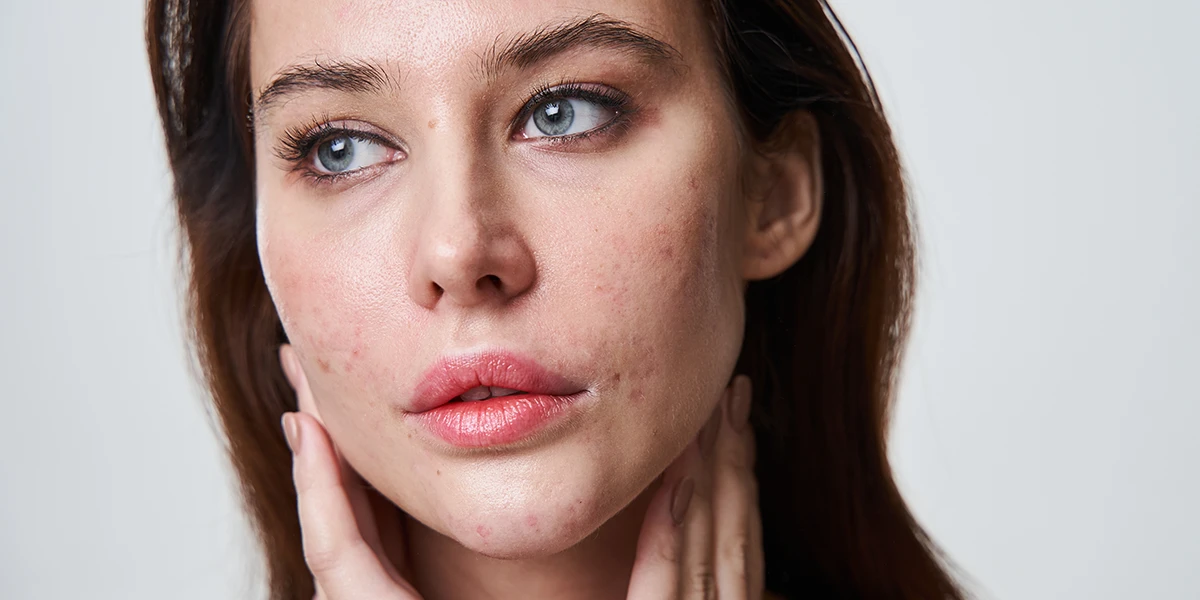
Acne scars are permanent changes in the structure of the skin following inflammatory spots. They most commonly appear as indentations, but can also be raised. They differ from the flat red or brown marks that remain after a spot. Distinguishing between the two is important because the method used to improve skin tone is not necessarily suitable for changes in skin texture.
How do acne scars form?
Deeper inflammation can damage structures in the dermis. During the healing process, the body builds new connective tissue. If this is insufficient or organised differently, a depression remains. If too much tissue forms, the scar may rise above the surrounding surface.
Scars can appear on the face, back, chest and shoulders. Not every spot leaves a scar, and not every scar is the same depth. A single person often has several different types. Therefore, the treatment plan usually begins with an assessment of the entire area and whether there is still active acne that continues to cause new lesions.
Key characteristics and types of scars
Atrophic scars are indented. Narrow, deep scars are sometimes described as ice-pick scars. Others have a wider base and clearly defined edges, whilst others create a wavy relief due to the skin being pulled by underlying fibrous bands. These differences are not merely descriptive: they influence the choice of treatment.
Hypertrophic scars are raised within the boundaries of the original injury. Keloids may extend beyond these boundaries. They require a different approach to depressed scars and are more prone to recurrence after treatment.
Brown spots following acne are usually post-inflammatory hyperpigmentation, whilst reddish marks may be residual vascular changes. If the skin is flat and there is no indentation or raised area, it should not automatically be considered a scar. Some people have both spots and scars. During your consultation, it is helpful to point out what bothers you most — the colour, individual deep spots or the overall uneven texture.
Causes and risk factors
The risk is higher in cases of deep, painful and prolonged inflammation. A genetic predisposition also plays a role. Scratching, squeezing and picking at spots can exacerbate the damage and increase the likelihood of residual changes. This does not mean that scars are always the result of improper care: they can also occur in people who do not tamper with their skin.
Delayed control of active acne allows more time for new inflammatory episodes. This is why scar prevention begins with appropriate treatment of the condition. Strong home peels and aggressive treatments on inflamed skin can cause further irritation, pigmentation and new scars.
Skin tone, susceptibility to pigmentation changes, a history of keloids and the overall condition of the skin barrier all influence the treatment plan. It is important for the doctor to be aware of all acne treatments, including isotretinoin, as well as the duration of their use. Intervals and restrictions are assessed according to the specific treatment and individual factors, rather than by a one-size-fits-all rule for all procedures.
Is it a medical condition, and when should we see a doctor?
A scar is the result of tissue regeneration. It is not usually dangerous in itself, but it can cause significant distress, and in the case of raised scars, itching or tenderness. The decision to seek treatment is a personal choice. There is no need to wait years before seeking an assessment, especially if your acne is still active.
A consultation is advisable for new scars, deep inflammatory nodules, raised areas or previous unsuccessful treatments. If a particular lesion is growing rapidly, bleeding, becoming ulcerated or does not resemble other scars, it should be examined rather than automatically assumed to be an acne scar.
Share how the condition affects your social life and self-esteem. This helps to set priorities. Bring photographs from the period when your acne was active, details of any previous treatments and the medicines you have used. Specify how much time you can set aside for recovery and what results you expect. This way, the treatment plan can be tailored to your daily routine, rather than simply choosing the most intensive method available.
Daily care and home remedies
Maintain a gentle routine involving gentle cleansing, moisturising and sun protection. UV exposure can make colour differences more noticeable. Do not squeeze new spots and follow the prescribed maintenance treatment for acne. Controlling new flare-ups is more important than constantly searching for a cream to treat old scars.
Home care products can help with overall skin texture and some pigmentation marks, but they cannot reliably resolve deep indentations or remove all pits. Applying more acids does not mean a deeper, safe correction.
Do lemon, bicarbonate of soda and home microneedling help?
Lemon, bicarbonate of soda, alcohol and concentrated acids can cause burns and discolouration. Home derma rollers carry a risk of infection and further damage, particularly with active spots. Do not attempt chemical resurfacing techniques on individual scars or injections yourself.
Concealing make-up can improve comfort, provided it does not irritate the skin and is removed gently. Between treatments, follow the specific recovery instructions. Skin that is still red or irritated should not be subjected to further home treatments in the hope of achieving faster results.
Modern methods for treating acne scars
The choice depends on the type and depth of the scars. For general texture improvement, fractional lasers, microneedling and suitable peels are discussed. Subcision may be used for tethered scars, whilst other local surgical or chemical techniques may be used for isolated deep defects. These are not suitable for self-administration at home.
Raised scars are treated differently, for example with injections and other targeted methods. A combination of treatments is often necessary, as no single technique corrects all types of scars equally. The aim is usually to reduce visibility and improve texture, rather than promising skin that is completely scar-free.
Options at Skin Line
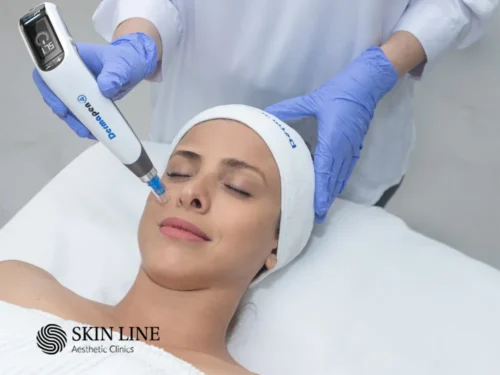
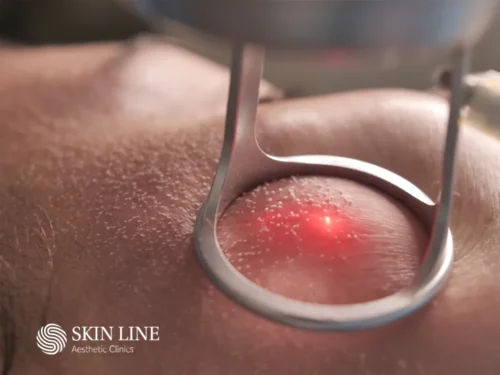
On Skin Line’s acne page, fractional CO₂ laser, Dermapen and radiofrequency microneedling for scars are presented. The specific choice is made following an examination and assessment of active acne. The procedures have varying recovery periods and may cause swelling, scabbing, pigmentation changes, infection or scarring.
Ask how the results will be assessed and when it is sensible to plan the next step. Photographs taken under consistent lighting and with the same facial expression help to ensure an objective comparison. Changes immediately following the procedure may include temporary swelling and do not represent the final result. A phased plan allows for the effects, tolerability and your actual goals to be taken into account.
Sources: AAD — acne scars; AAD — treatment; DermNet — acne scarring.
Start with the change that matters most to you and assess whether it is realistic for your specific scars. At your follow-up appointment, compare photographs taken under the same lighting conditions, without filters. If the improvement is only partial, discuss whether the next step will offer sufficient benefit in terms of recovery and cost, rather than automatically repeating the same procedure.
A personalised approach to your skin
Discuss your condition and treatment options with a specialist from Skin Line.
Clinics in Varna, Plovdiv and Sofia.
Treatment options
-
-
-
-
-

Treatment of acne scars with Morpheus8, CO2 laser & 2 x Rejuran S polynucleotides
1.355€Plovdiv, Sofia
Your care begins with a consultation
Choose a clinic that suits you and get in touch with our team.

