

SKIN LINE · CONCERNS
Ingrown hairs and irritation after shaving
Why they occur and how to change our skincare and hair removal routines
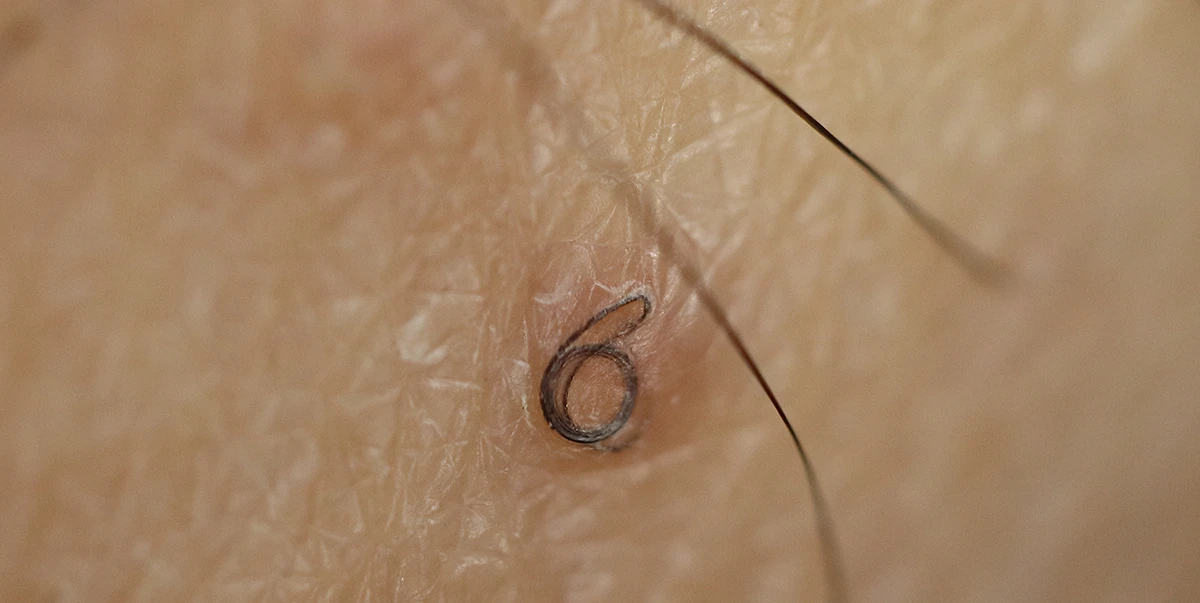
Ingrown hairs occur when a growing hair curls back into the skin or remains beneath the surface, rather than emerging freely. Inflammation may develop around it, causing a spot, itching and tenderness. The problem often occurs after shaving, waxing or plucking and can affect the beard, neck, underarms, bikini line and legs.
How do they differ from ordinary irritation?
After shaving, there may be a burning sensation and redness caused by mechanical friction, without an ingrown hair. With pseudofolliculitis, the main symptom is the reaction around the hair as it grows back into the skin. Infectious folliculitis is a different condition, although the two can occur simultaneously. Therefore, not every spot that appears after hair removal is treated with antibiotics.
A single ingrown hair is often a minor inconvenience. If it recurs, brown spots, lumps or scars may remain. The main aim is to break the cycle of very close shaving, inflammation and subsequent scratching. The solution usually starts with a change in technique, rather than increasingly aggressive treatment of the skin.
Main signs and forms
A small red or darker spot may be visible, with a curled hair beneath the surface. Sometimes there is a pus-filled tip, and sometimes a firm, painful lump. Itching and a burning sensation are exacerbated by friction from a collar, underwear or sportswear. Once the condition has subsided, a temporary pigmented patch may remain.
In cases of pseudofolliculitis of the beard, the lesions often recur in the same areas of the neck and lower jaw. On the rest of the body, the problem may follow the line of hair removal or areas subject to greater friction. Deep, frequently recurring lumps in the groin and armpits should not automatically be assumed to be ingrown hairs.
The skin may be both irritated by the shaving product and inflamed around the hairs. If there is a rash outside the shaved area, severe flaking or a reaction following the use of a new cosmetic product, there may be another or additional cause. A consultation helps to distinguish between a contact reaction, acne, infection and mechanical inflammation.
Causes and risk factors
Curlier and coarser hairs are more likely to grow back into the skin. Shaving too closely, stretching the skin and making repeated passes with the razor increase irritation. Shaving against the direction of hair growth may provide short-term smoothness, but in susceptible individuals it facilitates the recurrence of spots.
Plucking and waxing can also be triggers. Tight clothing, sweating and friction further exacerbate the discomfort. Clogging products or overly aggressive exfoliation can worsen the condition of the skin barrier. It is incorrect to attribute the problem solely to insufficient cleansing.
People with a history of pigmentation marks or a tendency towards raised scars should be particularly careful with any treatments. Removing a spot with a needle or tweezers can cause more damage than the original spot itself. Repeatedly plucking an inflamed hair does not permanently resolve the way it grows back.
Professional requirements for a smooth daily shave can make prevention difficult. It is important to discuss this during a consultation so that a workable compromise can be found, rather than giving advice that cannot be followed.
When should you see a doctor?
Ingrown hairs are usually a benign problem, but they can cause inflammation, infection and scarring. A consultation is advisable in cases of frequent recurrences, multiple spots, persistent marks, painful lumps or a lack of improvement after changing your technique. A medical assessment is also useful if you are unsure whether the hair is the actual cause.
Increasing pain, severe swelling, spreading redness, a fever or general malaise require prompt examination. Do not pierce a deep lump or squeeze it. If you have a weakened immune system or diabetes, inflammation requires a more cautious approach.
Show your doctor what device you use, how often you remove hair from the area, and what products you apply before and after. Photos taken in the first few days after shaving may be helpful. Discuss any previous reactions to laser or other treatments, a tendency to scar, and any medication you are taking.
Recurring lumps with discharge and scarring in skin folds may require assessment for another condition. It is not sensible to dismiss these as isolated ‘ingrown hairs’ for years on end without reviewing the diagnosis.
Daily care and gentler shaving
If you experience active irritation, allow the skin to calm down and consider temporarily stopping close shaving. When you resume shaving, soften the hair with water, use a suitable gel and shave in the direction of hair growth. Do not pull the skin taut and do not go over the same area repeatedly.
Keep the blades clean, sharp and dry between uses. Do not share them. For some people, a trimmer that leaves a minimal length causes fewer problems than a very close shave. After the procedure, use a gentle soothing product and minimise friction from clothing.
Exfoliation and home remedies
Moderate care with a suitable active ingredient may be considered, but a coarse scrub does not safely ‘remove’ every hair. Do not pierce the skin with a needle or pick at it with tweezers. Lemon, alcohol and bicarbonate of soda can exacerbate inflammation and pigmentation.
A warm, clean compress can sometimes relieve localised discomfort, but it does not treat a deep-seated infection. Do not apply very hot compresses. Do not use home-made injections, acids of unknown concentration or strong suction. The aim is to minimise mechanical damage, not to remove the visible hair as quickly as possible at any cost.
Modern methods and laser hair removal
Treatment is chosen depending on whether mechanical inflammation, infection or contact irritation predominates. The doctor may prescribe topical treatments to reduce inflammation and blockage. If an infection is confirmed, appropriate anti-infective treatment will be discussed. There is no one-size-fits-all combination suitable for every area and every individual.
In cases of recurrent pseudofolliculitis, laser reduction of the affected hairs may reduce the triggering factor. The effect depends on the pigment, hair thickness, skin type and the technology chosen. Very light and white hairs are affected differently from dark ones. The procedure is not carried out without an assessment of any unspecified active rash.
Consultation at Skin Line
The Skin Line laser hair removal page outlines the options for hair reduction. If your skin is inflamed, a dermatological examination is recommended first. The number of sessions, intervals and aftercare are tailored to the individual; an immediate and permanent solution cannot be guaranteed in every case.
Before starting a course of treatment, please inform us of your recent sun exposure, any medication you are taking and any previous adverse reactions. Possible side effects include redness, swelling around the hair follicles, changes in skin pigmentation and burns. Follow the preparation instructions, hair removal guidelines between sessions and sun protection advice.
Monitor not only skin smoothness, but also the frequency of inflammation and the appearance of new spots. This allows the effect to be assessed in relation to the underlying problem. If spots persist despite a change in technique, a reassessment is needed, rather than automatically adding more treatments.
Sources: DermNet — pseudofolliculitis; AAD — shaving technique; AAD — prevention of razor bumps.
A personalised approach to your skin
Discuss your condition and treatment options with a specialist from Skin Line.
Clinics in Varna, Plovdiv and Sofia.
Treatment options
Your care begins with a consultation
Choose a clinic that suits you and get in touch with our team.

